Mikao Usui asked his students to sit in meditation each morning with their hands in gassho and recite the five precepts. The Japanese word for recite, tonaeru, also means to chant, so you can chant them or say them.
The symbols and mantras of the system of Reiki were introduced to help people who found it hard to sense energy. Drawing a symbol and chanting its mantra gives the body and the eyes something physical to do, which brings the mind in. They are training wheels: once you can sense energy, you can let them go.
The old kanji for ki shows rice cooking in a bowl with vapour rising from it. The vapour is the energy, but the point is the rice: it is being cultivated. Ki is not something you take from anywhere or put into anything. It is your own energy, and the practice is about cultivating it.
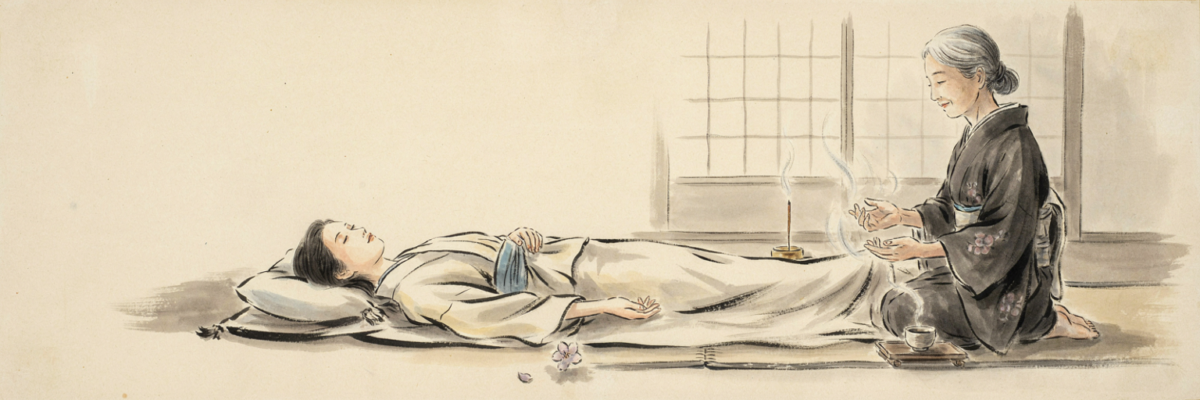
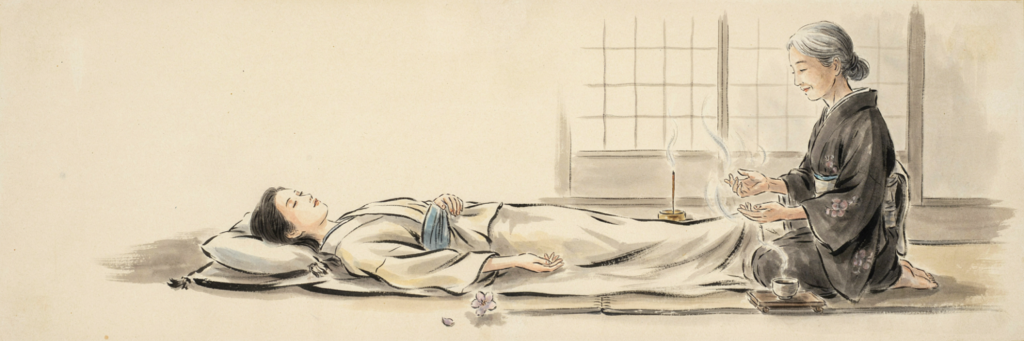
Byosen Reikan Ho is the scanning practice of the system of Reiki: passing the right hand over the body to sense imbalance or illness as a sensation, an echo from the body. It is taught by the Usui Reiki Ryoho Gakkai in Japan and appears in a 1933 book by one of Usui's students, so we can reasonably assume Mikao Usui taught it.
Hatsurei Ho means to generate greater amounts of ki. It is a sequence of practices from the system of Reiki, all working from the hara, that gather and strengthen your energy. I teach two versions: one built from Kenyoku Ho, Joshin Kokyu Ho and Seishin Toitsu, and one from the 1933 book by Usui's student Tomita Kaiji.
Reiki Treatments, Tested Against Massage 霊気 Reiki Treatments · Research Reiki Treatments, Tested Against Massage Eighty-seven cancer patients with hormone-therapy fatigue were randomised to massage or […]