
Does Reiki work if I don’t believe in it?
November 11, 2026A Conversation · Kurama Onsen · October 2026
鞍馬
Hyakuten Inamoto Believes It’s Time for Some Reiki Truth-Telling After decades as ‘the quiet one’, the founder of Komyo Reiki Do speaks openly about Chiyoko Yamaguchi, Hiroshi Doi and the Usui-kai
Reiki truth-telling from the heart of Kyoto, with Hyakuten Inamoto and Mamoru Wakatake
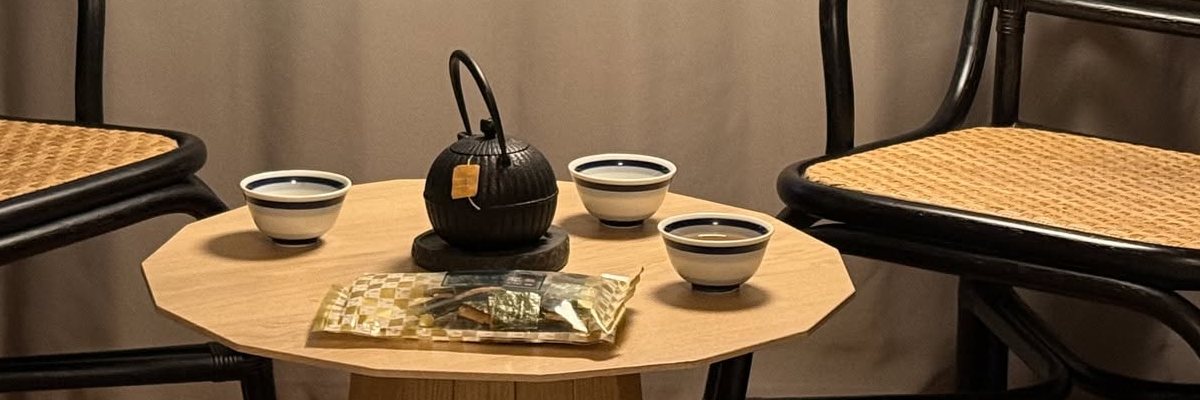
Hyakuten-sensei is 86. He told me so after a pause, working it out from his birth year, because, he said, ‘I don’t think about my age.’ He is a Jodo Shu priest, the owner of a fabulous pointy grey beard, the founder of Komyo Reiki Do, and one of only a handful of people who learned the system of Reiki directly from Chiyoko Yamaguchi. Hyakuten-sensei describes himself as ‘the quiet one’. He was about to break that label as he has never, in the 25 years I have known him, given an interview like this one.
Hyakuten-sensei had come to tell the truth about his own experience, something he has held back for most of his Reiki life.
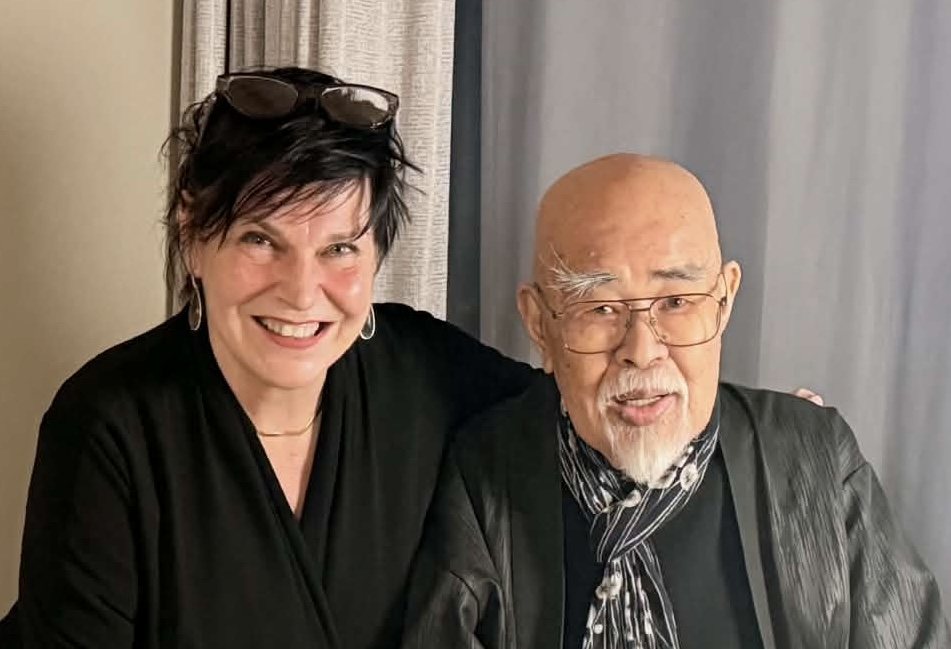
Beside him sat Wakatake-san, who writes under a pen name and speaks just a touch of English. He is a member of the Usui Reiki Ryoho Gakkai, the society founded by Mikao Usui, known in Japan simply as the Usui-kai, and for some time now he has been doing something almost nobody in that society does: writing about it, openly, so that the rest of the world can know what it is. This has been, I sense, lonely work and I am honoured to have given some voice to this mission.
I met Hyakuten-sensei 25 years ago in Japan and invited him to teach in Australia. Around this time he was also at Hiroshi Doi’s side, translating for a man whose whole public standing rested on being a member of the Usui-kai. What very few people know is that Hyakuten-sensei has himself been a member of the Usui-kai for a number of years. He teaches his own teachings, not those of the Usui-kai, and membership of that society is, in his words, ‘a personal privilege’. The obvious connection to the society would have been through Doi-sensei, so I asked whether Doi-sensei had been the one who had introduced him into the Usui-kai. ‘No. He never did.’ He had known Doi-sensei was a member, he said, ‘but I had no feeling that I could ask him’.
The result is that Hyakuten-sensei is now, I think, the only person alive of whom all three things are true: founder of a Reiki system taught around the world in his own Reiki teachings, trained through Chiyoko Yamaguchi, and a member of Mikao Usui’s own Usui-kai. When he describes the difference between what the West practises and what the Usui-kai practises, he is not comparing a thing he knows with a thing he has read about. He has done both.
‘Basically I try to keep quiet, a low profile, because we have Wakatake-san.’ And when I asked what he thought of Wakatake-san’s work, he responded with a burst of joy: ‘Amazing. Very brave and very smart.’
There is one more thing the two of them share, which came out almost in passing. I had just been to Koyasan and was talking about Shingon rituals, the fire and the incense, and Hyakuten-sensei was explaining that every tradition reaches people the same way, through the eye, the nose and the ear. I thought at once of Usui-sensei’s own instruction that we heal with the eyes, the hands and the breath. Different senses, same principle: as humans the body is the instrument, whichever tradition is playing it. In Jodo Shu, however, there is no hands-on healing; the whole practice is to chant the name of the Buddha, Namu Amida Butsu. That is the healing. It stood out to me that these two friends were both Jodo Shu. ‘Jodo Shu, yes,’ Hyakuten-sensei said, and then, as if it settled something: ‘Usui-sensei, Jodo Shu.’ Two Pure Land Buddhists, one of them a priest, sitting at the base of Reiki-famed Mount Kurama, encircled by the cedar and cypress forest, talking about a practice whose founder, Usui-sensei, was a Pure Land Buddhist too.
Back in 2015, Hyakuten-sensei and Wakatake-san first met fortuitously at Amataka Shrine, the small village shrine near Usui’s birthplace, and went back there together three years running. They will also be visiting the shrine together next month, a blessed reunion. It was Wakatake-san who brought Hyakuten-sensei into the Usui-kai. ‘I owe him very much,’ Hyakuten-sensei said.
I had come with a page of questions, many of which were answered before I could voice them, and a loose idea that the two of them approached their Reiki practice from different directions. What I found instead was an arrangement between friends. Hyakuten-sensei had come to tell the truth about his own experience, something he has held back for most of his Reiki life. Wakatake-san, who has been telling his own truth about the Usui-kai more or less alone, had come to lend him that company. Each of them, it seemed, carried the other.
How to read thisWhat follows is not a transcript; it is my account of the afternoon. Hyakuten-sensei translated for Wakatake-san as we went, so where I quote Wakatake-san I am quoting Hyakuten-sensei’s rendering of him, checked afterwards against the Japanese. Both men asked me to decide what to publish, and the judgments are mine. The full recording and transcript will remain private: Hyakuten-sensei did not hold back, and an 86-year-old man’s complete testimony deserves to be kept whole and safe rather than published in pieces.
The book he couldn’t afford
Wakatake-san asked the question I had been saving: how did Hyakuten-sensei come to know Chiyoko Yamaguchi? ‘It’s a long story,’ he said, and told it anyway.
It begins with a book. In the mid-1990s, in a Kyoto bookshop, Hyakuten-sensei found the Japanese translation of one of the first Reiki books ever published in the West, by one of Hawayo Takata’s own teachers.
He was a priest who was looking for something: energy, in his hands.
The book was simple, and it was about exactly that, healing with hands.
It was also too expensive, he said, showing me empty pockets. He put the book back, meaning to return, and forgot. A week later he remembered, went back, and it was gone; another shop, also gone. He laughed about it, but he called it a big lesson: ‘Whatever you do, get it right there. Go back at least the next day. Not one week, two weeks.’ Years later he still speaks of the translator, Mieko Mitsui, with gratitude, though he never got to read her work.
No internet, no way to find a teacher. He eventually heard of an Australian woman teaching Reiki in English in Tokyo (and, no, it wasn’t me) and wrote to her. The answer came back: levels one and two together, 75,000 yen. He couldn’t pay it. ‘So I had to give up.’ And then, in the same breath: ‘But there was a blessing in disguise.’
He talked about the idea of Reiki so much that a friend finally said: in Kyoto there is an obaasan. ‘Obaasan means an old woman, but with the honorific “o” it carries high respect,’ he explained. ‘Because Reiki Ryoho haunted me. I wanted to learn it. I didn’t want to give up easily. That’s my kind of motivation: I needed a Reiki teacher.’
The obaasan was Chiyoko Yamaguchi, who had learned from Chujiro Hayashi before the war. Hyakuten-sensei’s impression on first meeting her was that she was bored, watching television with nothing to do. ‘I thought teaching something to other people might be good for her.’
It was 1997. Five students began; three dropped away. For over a year, every Monday, there were no levels, no manual, no certificates and no fee. ‘I asked her, how much? She said: iranai. I don’t need it.’
What she taught was hands-on healing for the self and others, and reiju received week after week. She showed them the first symbol and the one for distant healing, under names a little different from the Western ones; she did not teach the others, and she did not teach the precepts or meditations. ‘Very simple,’ he said, more than once, and he did not mean it as a complaint.
The lessons ended when her youngest son, Tadao, built a school around her teaching.
Chiyoko Yamaguchi apologised to Hyakuten-sensei, and he understood. ‘I have nothing but Reiki. I have to help my son.’
Since she would take no money, he found another way to thank her: as a priest, he gave her a Buddhist name, the posthumous name a temple ordinarily gives only after death. She was delighted but her son never used it.
What the Usui-kai is, and isn’t
Most of what Western practitioners believe about the Usui-kai comes from a very small number of sources, and it has been hard to check. So I asked the obvious question of two members sitting in front of me: how does it actually work?
Curiously, nobody in the Usui-kai teaches. Not members, not even the Shihan, the senior figures some in the West would call masters. ‘Even a Shihan, no,’ Hyakuten-sensei said. A Shihan is in charge of the regular gathering, the kenkyukai or study meeting, which members must attend every month. At those meetings members practise what Hyakuten-sensei called ‘a routine training program’ under the Shihan’s guidance; they don’t take classes from them. There is no equivalent of a workshop. Progress through the grades, Shoden, then the two parts of Okuden, can take years. Hiroshi Doi-sensei took ten and is not a Shihan.
This is why, Hyakuten-sensei said, he has never had any intention of teaching ‘Usui Reiki’ and does not believe anyone can:
There isn’t, in a way, anything to teach.
Hyakuten Inamoto, on ‘Usui Reiki’
His own system, Komyo Reiki Do, was never meant to be the Usui-kai’s method carried outside. The name: komyo is an everyday word in Buddhism, and do was added later because, as he said, in Japan everything is a do: judo, kendo, kado, sado. A path that is also a training.
It also means that the Western idea of lineage, teacher to teacher to you, doesn’t describe what happens inside the society. There are Shihan and there are members; membership is personal. Hyakuten-sensei says of Wakatake-san’s position as a member that it helps him to ‘go deeper and deeper’ into his own personal research.
The society is closed, and both men are sad about that. Hyakuten-sensei was blunt: ‘Very disappointed. Very sad.’
He does not believe they are following the spirit or heart of Usui-sensei. ‘Open the door. Share the gift with everybody.’ Wakatake-san’s view is the same, and it is, I feel, the reason we have connected so easily. The Usui-kai, he said, ‘has truly held the techniques and the way of thinking about hands-on healing since long ago’, and people outside it deserve to know what that looks like. A previous president did try to open things up, both men acknowledged, and was overtaken by those around him. Neither expects the next generation to try again. They are not angry about it; they sound, mostly, like people watching something they love grow old.
Two, but one
I had a theory, going in, that the two men came at Reiki from opposite sides: Wakatake-san the practical one, interested in technique and history; Hyakuten-sensei the spiritual one, the priest. I put it to them and was politely corrected by both.
‘My interest,’ Hyakuten-sensei said, ‘is hands-on healing. And, how should I say, spiritual development. I like to develop my character. So for me, two.’ Then he turned to Wakatake-san and asked him the same question in Japanese. The answer came back: onaji desu ne. The same. ‘Hands-on healing first. Then one’s own improvement. When you improve, you can do hands-on healing; when you can do hands-on healing, you improve.’
Hyakuten-sensei put his palms together. Reiki Ryoho, he said, is two-fold, like gassho: the hands, and the cultivation of the spirit.
‘That these are one has been my view from the start. They are not separate.’
Wakatake-san then described clearly how this looks inside the Usui-kai. At a meeting you do kenyoku, the dry bathing; you do joshin kokyu, the breathing; you sit in gassho. ‘Up to here is spiritual cultivation. You cultivate the spirit, and when the reiki grows strong, you do hands-on healing. So it’s the same. That’s why it is hard to split it cleanly.’
It struck me, listening, that much of the Western argument about whether Reiki is ‘really’ a healing modality or ‘really’ a spiritual practice is an argument neither of these men would recognise.
Thirty years of being the quiet one
For most of the past three decades Doi-sensei was the only member of the Usui-kai who taught and published in the wider world. His books, and the system he built, are where most of what Western practitioners believe about the Usui-kai comes from. Through Hyakuten-sensei’s ability to translate, Doi-sensei’s wife used to tell him, ‘Thanks to you, my husband is now a big name.’ After five or six years it became too much to do that and teach Komyo Reiki as well, and he stepped back.
What he did not do, for all that time, was say what he thought. I asked him why, now that I had him in front of me with a recorder running. ‘Because I am the quiet one,’ he said, and then, after a moment, ‘I try to keep a low profile.’ Before continuing, I reminded him that we were recording.
‘No problem. It’s true. I’m not telling a lie.’
Hyakuten Inamoto
What he thinks is this. The Usui-kai, as he and Wakatake-san know it from the inside, does not match the version that was carried out to the world. For example, nobody in it teaches.
The idea of a lineage running from Usui through the society’s presidents to a Western master is not something the society recognises.
The fourth symbol that Takata gave her teacher students, and which Hyakuten-sensei holds a copy of, is unknown inside the Usui-kai; nobody can say whether it came from Hayashi or from Takata herself. And the system Doi-sensei teaches is, in Hyakuten-sensei’s words, ‘from the start, the Western Reiki system. Look at his symbols. Exactly the same as Takata-sensei’s.’ He does not say this to diminish Western Reiki, which is also what he himself teaches. He says it because the two are different, and because Doi-sensei’s account of the Usui-kai was, for decades, the only one available: repeated in books and classes until it was simply accepted. As he put it:
If you keep on saying something more than a hundred times, it becomes true.
Hyakuten Inamoto
It was Wakatake-san who made it possible for him to say it. ‘Because we have Wakatake-san,’ Hyakuten-sensei said, when I asked why he had stayed quiet so long, meaning: now there is someone else doing the talking. Wakatake-san’s own description of his role was unexpectedly modest. He had appeared, he said, ‘to pick up the stories that had been scattered about, and bring them to a close’. When he began writing publicly, Hyakuten-sensei had not known he was going to. ‘I had no idea. But my students very much support him. They agreed with what he says.’
I should say plainly:
None of this is a campaign against anyone. Hyakuten-sensei’s complaint is not that one man became famous; it is that for a long time the Reiki world had one account of the Usui-kai and no way to check it.
And practitioners who were, in his phrase, ‘so serious about this path’ deserved better. ‘Until that time, everybody believed,’ he said. ‘Slowly, slowly, we come to know.’
The foundation
Wakatake-san turned the interview around near the end and asked what I wanted to do next. I said I was interested in history. On reflection, my answer to his question may more accurately have been ‘immersion’; that is what my purpose is. Pure immersion in the practice, and that practice needs to be one grounded in truth. He answered with something I had not known: in all the Usui-kai, only three members had ever taken a serious interest in the society’s own history. ‘Nobody else cares,’ he said. Members had been interested in Koyama-sensei, the president many of them knew, but not in Usui.
It seemed to me that a practice which does not know its own past will change without noticing, and I said so. Neither man disagreed.
Hyakuten-sensei’s advice was that history is the path open to someone like me, from outside. ‘You have your own path.’ Then, in Japanese to Wakatake-san, and in English to me, he said he was looking forward to my book. I had not told him I was writing one. He went on to say, ‘We know what we should do. Because we are so serious about this path. So I’m sure there should be some path for you, for him [pointing at his friend], for me, and for us three of us.’ I felt the passing on of a baton of some kind. Something that I am yet to discover within my own practice.
Wakatake-san is currently working hard to build an online platform with a semi-open study community. Every member will be asked to take on an active role. It is a study circle dedicated to understanding authentic traditional Reiki practice, and in Japan, he has already begun holding in-person study sessions.
My last question was the one I had really come to ask. What would they like Reiki people outside Japan to understand? Wakatake-san’s answer was pointed, and Hyakuten-sensei agreed with it at once. People everywhere want to know what the Usui-kai does. What it has done, all along, is hands-on healing: the technique and the way of thinking about it. ‘The most basic of basics.’ If the world outside learns that, Hyakuten-sensei said:
Then we become aware of the very foundation of Reiki Ryoho.
Hyakuten Inamoto
合掌
Inside the Usui-kai
Three conversations with Wakatake Mamoru
Wakatake-san has been speaking openly about the Usui-kai from the inside. Our earlier interviews go deeper into what the society does, and doesn’t do.
Reiki with Bronwen News
Enjoyed this article?
I write about Reiki history, research and practice from a Japanese perspective. Join my newsletter and the next article will come straight to your inbox.
Free, and you can unsubscribe at any time.