

Reiki Research: The Power of Reiki for Children Fighting Cancer
January 18, 2026
What Your Reiki Practice Might Be Missing
January 23, 2026
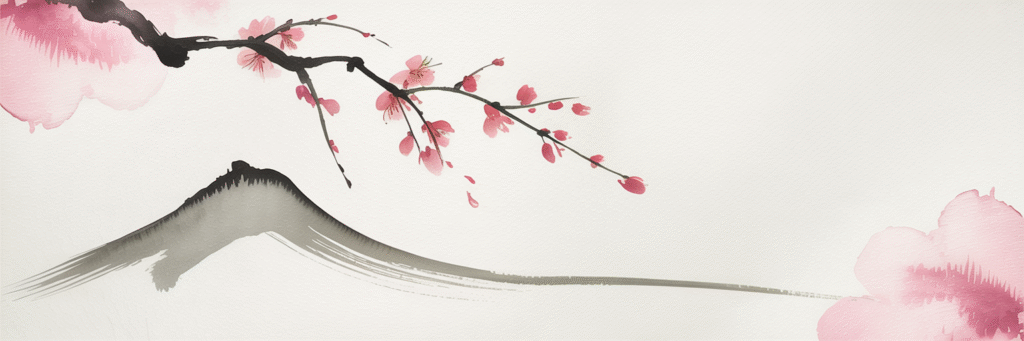
Why should my heart remain stained by blossoms
when I thought I had tossed all that away? — Saigyō花にそむ心のいかで残りけむ捨てはててきと思ふわが身に
hana ni somu kokoro no ika de nokori kemu / sute hatete ki to omofu waga mi niSince the day I saw the treetop blossoms of Mt. Yoshino
my heart has not stayed with my body at all — Saigyō吉野山こずゑの花を見し日より心は身にもそはずなりにき
Yoshinoyama kozue no hana wo mishi hi yori / kokoro ha mi ni mo sohazu nari ni ki
When the medieval poet Saigyō composed these waka (Japanese poems) about cherry blossoms, he wrote of a struggle every spiritual practitioner knows intimately. Here, his kokoro—his heart, spirit, emotional self—is refusing to stay aligned with his mi—his physical body and chosen path. In Japanese spiritual language, kokoro represents the seat of emotions, intentions, and consciousness, while mi refers to the physical self and one’s embodied existence in the world. The blossoms call to something in his kokoro that takes him away from his practice.
This mind/heart-body duality that Saigyō explores in his poetry connects to the Japanese concept of san mitsu—the three mysteries or three diamonds of body, mind and breath. When we recite and contemplate waka as spiritual practice, we’re working with all three simultaneously: our bodies sit in meditation, our minds engage with the meaning, and our voices (breath) sound the syllables. But as Saigyō discovered, these three don’t always align. Our body may look as if it is meditating and yet our heart wanders to cherry blossoms—our stories, worries, fears. What we find in this poem is the realisation that our kokoro and mi pull in different directions. When Saigyō wrote “my heart has not stayed with my body at all,” he describes a meditation session we’ve all experienced.
The Reiki precepts ask us not to anger, not to worry, to be grateful, to stay true to our path and be compassionate—but they begin with “for today only” (kyo dake wa). They acknowledge that complete integration of body, mind and breath isn’t achieved once and held forever. It’s a daily practice of noticing where we are, moment by moment. Waka poetry can become a mirror for this work. When you recite a gyosei (poem) or even compose your own, pay attention:
Where does your kokoro go?
What remains “stained” in your heart despite your intentions?
Saigyō’s cherry blossom poems aren’t confessions of spiritual failure—they’re demonstrations of the practice itself. By naming the gap between his sitting body and his blossom-loving heart, he is uniting the three diamonds. Poetry becomes the bridge, the practice that connects body, mind and breath.
This is why Mikao Usui included over 125 waka in his Reiki teachings—not as pretty decorations or cultural artifacts, but as tools for integrating kokoro and mi, of polishing the three diamonds until body, mind and breath move once again as One.
Saigyō (1118-1190) was a Japanese Buddhist monk and poet who left his position as an elite samurai to pursue a life of spiritual practice and wandering. He composed over 2,300 waka poems, many exploring the irresistible beauty of the natural world. His personal poetry style influenced generations of Japanese poets and spiritual practitioners.
Want to learn more about the poems Mikao Usui used in his teachings? Take Bronwen’s Waka Wisdom online course.
Here’s a podcast about the blog. I really enjoyed this one – it’s quite funny (not sure about their description of me though – haha)