

Why don’t you use crystals in your Reiki practice?
November 6, 2026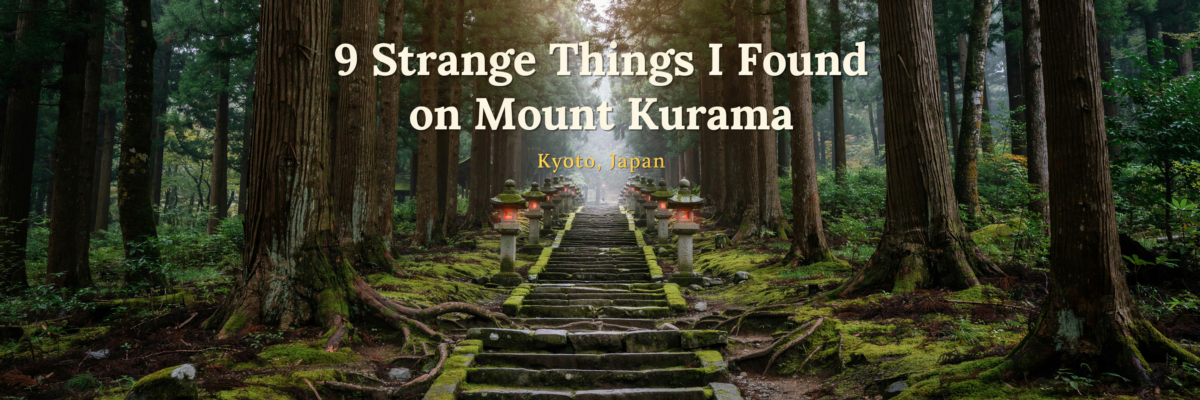
In October 2026 I walked over Mount Kurama, the forested mountain half an hour north of Kyoto. As a Reiki practitioner and teacher we know it as the place where Usui Sensei trained in 1922.
I didn’t expect it to be so wonderfully strange. Within a few hours I had met tigers, goblins, an alien god and a star set into the stone.
The video is under three minutes, so there was only room for a line or two on each. Here is a little more about each of the nine, including which parts are history and which are legend.
The nine strange things
1. Built to keep demons out of Kyoto
In 794 the emperor moved the capital to Kyoto, then called Heian-kyō. In Chinese and Japanese geomancy, evil and misfortune were thought to come from the north. So in 796 CE a temple was built on Kurama, due north of the palace, as a spiritual barrier. It is called Kurama-dera and was dedicated to Bishamonten, the Buddhist guardian of the north. The temple itself traces its first hermitage back further, to a monk named Gantei in 770.
2. Tigers create (and end) the universe
Most Japanese temples and shrines are guarded by a pair of stone lion-dogs, called komainu. Kurama has tigers instead, because the tiger is Bishamonten’s messenger. Like the lion-dogs, they come as a pair: one with its mouth open, one with its mouth closed. Together they say “a” and “un”, the first and last sounds of the Sanskrit alphabet. In Japanese Buddhism this pair stands for the beginning and end of all things. You walk into the temple between them.
3. One of the gods is an alien
Kurama-dera worships three deities together as one: Bishamonten, the thousand-armed Kannon, and Mao-son. According to the temple, Mao-son descended from Venus six and a half million years ago to guide the evolution of humankind, and he has never aged. His shrine, Mao-den, stands deep in the forest at the inner sanctuary, over the rock where he is said to have landed. Older sources describe Mao-son as a protective mountain spirit; I could not find the Venus story told anywhere before the temple’s modern teaching.
4. A star that recharges you
In front of the main hall, a six-pointed star is set into the paving. It’s called the Kongō-shō, the “diamond floor”, and the temple describes it as a star mandala of cosmic energy. The triangle in the centre stands for the mountain’s three gods, Bishamonten, Senju Kannon and Mao-son, joined as one. Standing in its centre, you are said to receive the energy of the mountain and the cosmos. People queue for their turn. Nobody tells you how long to stand there.
For a temple more than 1,200 years old, the star is surprisingly young. It sits in the forecourt of a main hall rebuilt in the 20th century, and its meaning comes from the temple’s new teaching after 1949 (more on that at number 8). The idea of standing on it to recharge is newer still. It took off in the 2000s, when Japan fell in love with “power spots” and magazines put this one on the map. Old mountain, new magic.
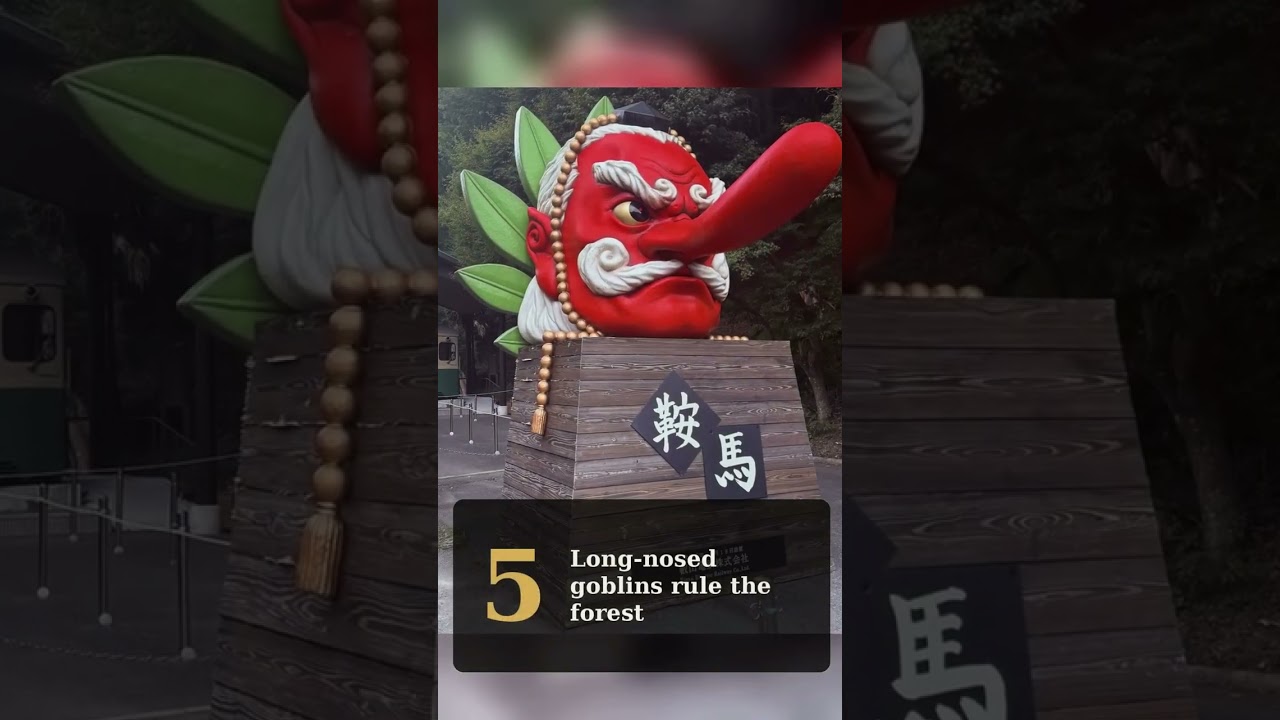
5. Long-nosed goblins rule the forest
Kurama is famous for its tengu: winged mountain spirits, part bird and part mountain ascetic, and legendary swordsmen. Their king, Sōjōbō, is said to live in the valley between Kurama and Kibune. A giant red tengu head greets you outside Kurama Station. In the village you can buy tengu-faced rice crackers labelled jaki-barai, “begone, evil”. I bought some. (I’ve written more about the tengu in Why the Tengu at Mt. Kurama Isn’t a Spirit Guide.)
6. A boy trained at night by goblins
Minamoto no Yoshitsune, born in 1159, was sent to Kurama-dera as a small child after his father was killed. Legend says he slipped out every night to be trained in swordsmanship by the tengu. On the path there is a spring, Iki-tsugi no Mizu, where he is said to have stopped to catch his breath. Nearby, the Sekurabe-ishi stone marks his height when he left the mountain in 1174 CE, aged about sixteen. He became one of Japan’s most loved warriors, and died at thirty, betrayed by his brother.
7. Trees with their roots on the outside
Between the main hall and Mao-den, the path crosses a stretch called Kinone-michi, the Root Road. The bedrock is so hard that the cedar roots cannot push down, so they spread across the surface in a great tangle. Legend says this is where Yoshitsune practised his footwork. It is beautiful, and it is hard work on the knees.
8. The temple started its own religion
For about a thousand years Kurama-dera belonged to the Tendai school of Buddhism. In 1949, under its head priest Shigaraki Kōun, it left Tendai and became an independent religion, Kurama Kōkyō. Its three deities became one: Sonten, the energy of the universe, expressed as light, love and power. The gods are old; this way of understanding them is modern.
9. He stubbed his toe and became a healer
In 1922, Mikao Usui is said to have spent twenty-one days of practice and fasting on Kurama. His memorial stone, erected in 1927, records the retreat. The story of what happened next comes later, mainly through Hawayo Takata: on the way down, Usui stubbed his toe, held it in his hands, and the pain and bleeding stopped. That, the story goes, was the beginning of the system of Reiki. Whether it happened that way is a question I explore in Part 2.
If you go
Kurama is an easy day trip from Kyoto, and you can walk over the mountain to Kibune and come back by bus and train.
- Getting there: take the Eizan Railway from Demachiyanagi Station to Kurama, the end of the line. It takes about 30 minutes. The giant tengu head is outside the station.
- Luggage: there are coin lockers at Kurama Station, if you are carrying a bag between hotels as I was.
- The cable car: just inside the main gate, a small cable car runs up to the pagoda for a ¥200 donation. It takes two minutes and runs about every 20 minutes. It saves a steep climb, and I recommend it.
- Timings: the temple’s own guide board gives these times from the main gate.
| From the main gate to | On foot | With the cable car |
|---|---|---|
| Main hall (honden) | 30 min | 15 min |
| Mao-den, the inner sanctuary | 70 min | 55 min |
| West gate, Kibune | 90 min | 75 min |
- Knees: the walk from Mao-den down to Kibune is the steepest part, with stone and wooden steps and the root road. Take it slowly and use the rails.
- Kibune: you come out by the river at Kibune, a short walk from Kifune Shrine and its red lantern steps. A bus runs from Kibune down to Kibune-guchi Station, where the Eizan train takes you back towards Kyoto.
- Lunch: I ate at Yoshuji, just below the main gate, which serves vegetarian temple food (shōjin ryōri). It is cash only and very cool.
- Etiquette: photography is fine outdoors, but not inside the halls. Purify your hands at the water basin before you approach the main hall.
A poem about Kurama
Matsuo Bashō wrote this in 1663, when he was about nineteen:
月ぞしるべこなたへ入らせ旅の宿
tsuki zo shirube / konata e irase / tabi no yado
the moon is your guide,
this way, come in,
a traveller’s inn
It never names Kurama, but any reader of his time would have caught the reference. In the Noh play Kurama Tengu, the cherry blossoms call to the young Yoshitsune, “we are your guide, come this way”. Bashō swaps the blossoms for the moon. It is a small, playful nod to the mountain, and I love that it is still an invitation.
What really happened on Kurama?
Much of what is told about Kurama, including Usui Sensei’s story, is legend that has gathered over the decades. In Part 2, I walk you over the mountain and look at it honestly: what we know, what we don’t, and why it matters for how we practise.
Which of the nine did you find strangest? Tell me in the comments on the video.
If you would like to learn the system of Reiki from a Japanese perspective:
- Shinpiden+, for practitioners who have completed Reiki III and want the whole system, in one coherent piece
- The Shūyō app, for a simple daily practice, morning and evening
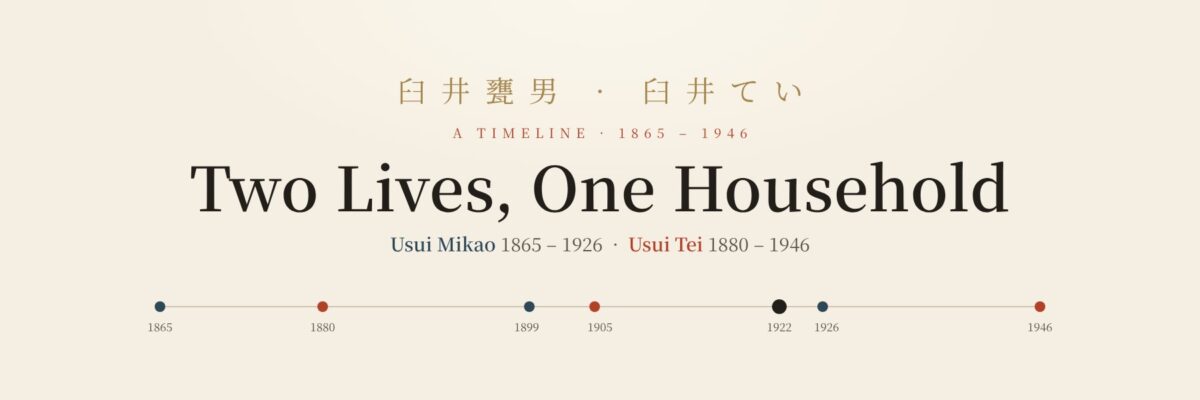
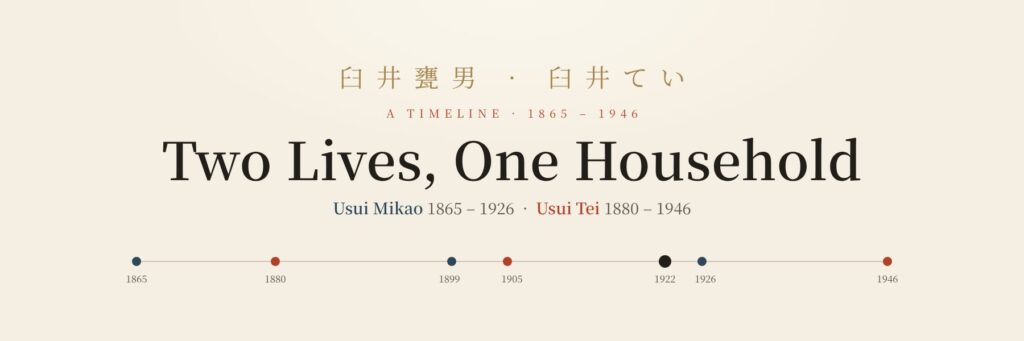
- Two Lives, One Household, my timeline of Usui Mikao and his wife, Usui Tei