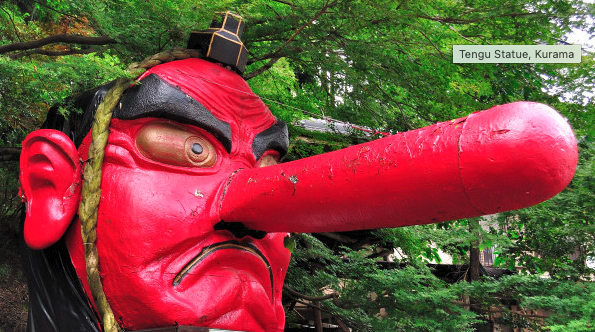


Why the Tengu at Mt. Kurama Isn’t a Spirit Guide
February 10, 2026
Why Reiki Practitioners Need Purpose, Not Just Goals
February 22, 2026
Recently, I encountered discussions online stating that Mikao Usui included Emperor Meiji’s waka (Japanese poetry) in his teachings as political protection, to prove his practice was safe and loyal during politically dangerous times.
During Usui’s era, the Japanese government promoted the State Shintō system, suppressing practices like Omotokyo and Tenrikyo. Practitioners of these reijutsu (spiritual techniques) faced regulation under the Medical Practitioners’ Act. In this climate, many spiritual and martial arts organisations placed the Emperor’s rescript and waka at the center of their spiritual teachings to demonstrate patriotism and governmental alignment.
My thoughts: Does this historical analysis make meditation contemplation with waka any less potent?
The Context
Usui Reiki Ryōhō never faced the suppression that Omotokyo and Tenrikyo experienced. The system of Reiki as we understand it today was likely not fully formed with all elements—tenohira, gokai and waka, meditations and techniques, shirushi and jumon, and Reiju—until approximately 1922. By this time it had become associated with Japanese naval officers. Having these officers as members gave the Usui Reiki Ryōhō Gakkai (the Reiki association) a legitimacy and protection that was far more substantial than poetry alone could provide.
The Meiji state promoted Yamato damashii (Japanese spirit) and loyalty to the Emperor (who, by the way, died in 1912). Waka, as a native poetic form distinct from Chinese-influenced poetry, was viewed as expressing the true Japanese soul. Practices incorporating waka were seen as cultivating this loyal spirit aligned with State ideology.
So yes, waka helped provide protection and legitimacy. But it wasn’t the only protective factor, and perhaps not even the primary one.
Creating the Practice
Here’s what we know about Mikao Usui: he was internationally educated, widely travelled, and deeply curious about spirituality. A brilliant, modern man of early 1900s Japan.
If he needed more political cover, he could have displayed the Emperor’s portrait or recited the Emperor’s Imperial Rescript on Education as many martial artists of that time did. What he actually did was make waka contemplation a core practice, placing it within the foundation meditation practice of Hatsurei Ho.
Emperor Meiji’s waka weren’t random poems. They spoke to self-cultivation, moral development, natural wisdom, and the human spirit. Themes essential to a thinking Reiki practice, no matter the era.
Usui was wise enough to choose material that served both political safety and spiritual depth. Both can be true simultaneously.
The Practice Outlived Its Political Purpose
But the real proof that waka was more than political protection lies in what happened after that protection was no longer needed.
Consider the timeline:
1912: Emperor Meiji died; Meiji Restoration ended (although it’s effects continued)
1922: Creation of Usui Reiki Ryoho Gakkai
1926: Mikao Usui died
1927: Memorial stone erected
1933: Kaiji Tomita (Usui’s student) published detailed Hatsurei Ho instructions including waka contemplation
1974: Usui Reiki Ryoho Gakkai manual documented waka as one of two main purposes of the system (alongside the precepts)
Present day: Usui Reiki Ryoho Gakkai continues to recite waka at meetings
Waka has remained central to the system for over a century in Japan, through Usui’s death and through dramatically changing political climates. If it were merely political protection, why would successive generations of students continue emphasizing it? Why would the 1974 Gakkai manual position it as essential to the system’s purpose? And why would it still be practiced in Japan today?
The value of waka has clearly transcended its historical context.
Why We Want to Dismiss It
And yet, many modern practitioners are quick to set waka aside. I believe this reveals more about our cultural biases than about the practice’s validity.
In the West, there is often a cultural cringe when it comes to poetry. It has become something viewed as intellectual and difficult, something we had to study in school, that doesn’t relate to our daily lives or the “real world”. We love techniques, rituals, chanting, hand positions… things we can do.
But self-reflection can be really tough. To think about who we are and why we are the way we are. Waka brings us into contemplation with ourselves and that isn’t always pretty.
After working with waka for a number of years, I have experienced that contemplation of these sparse words draws us in and transforms our minds, revealing rare thoughts and mysterious understandings that might even be considered shortcuts to spiritual development.
The Question We Should Ask
Here’s a test: Would we abandon the Reiki Precepts (gokai) if we learned they also served political purposes?
We would not, because we recognize that practices can have historical context AND timeless value.
So what makes waka uniquely valuable? The clarity of self that we gain from waka contemplation is unlike anything else in the system. According to traditional sources, the system of Reiki has two main purposes: the precepts as foundation, and inner awakening through waka contemplation. Not one purpose. Two.
Was Usui politically savvy? So it seems. Did waka serve strategic purposes? Quite possibly. Does this make it less essential today? Not even slightly.
The proof isn’t in historical debate—it’s in the practice itself.
I invite you to test this for yourself. Practice waka contemplation and discover what emerges. Because the real question isn’t whether Usui was clever enough to use waka as protection, it’s whether you’re willing to discover what makes it one of the two core purposes of this practice.
————
Take my online Shinpiden+ course to learn about the depths of Japanese Reiki.
Join me in my fortnightly Online Reiki Coaching Group where we regularly practice waka contemplation.
OR Learn more about practicing with waka through the Waka Wisdom 21-day online course.