
What is Joshin Kokyu Ho?
September 4, 2026
What is Hatsurei Ho?
September 5, 2026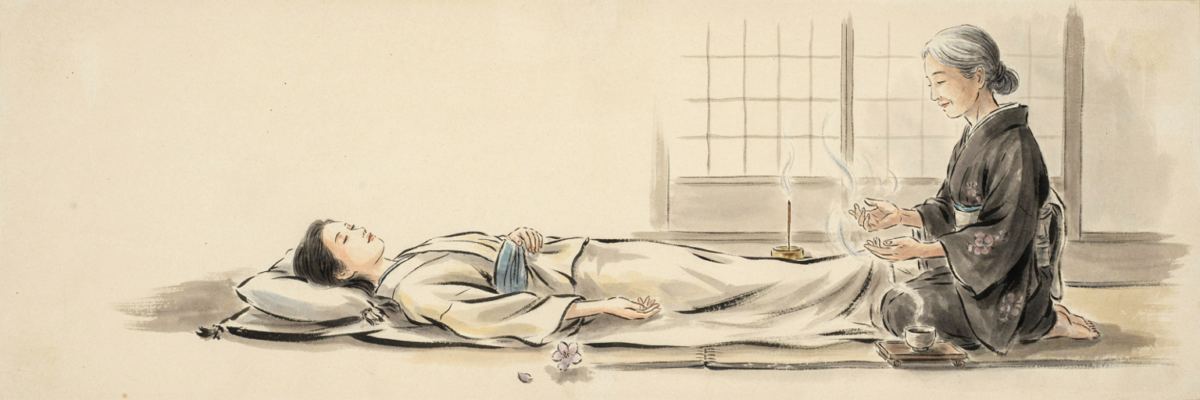
Reiki Treatments · Research
Reiki Treatments, Tested Against Massage
Eighty-seven cancer patients with hormone-therapy fatigue were randomised to massage or to Reiki treatments, in the official journal of the network that writes America’s cancer care guidelines.
In this study: Reiki treatment = a hands-on session given to a patient by a practitioner. Reiki = the spiritual energy itself.
The study
Three arms, and a question about dose
Cancer-related fatigue is the exhaustion that rest does not touch. Around 60% of women on aromatase inhibitors and over 40% of men on androgen deprivation therapy live with it. The guidelines recommend exercise, but not everyone on hormone therapy can exercise. So researchers at the University of Rochester’s Wilmot Cancer Institute tested the two main passive options against each other.
Every participant had moderate or worse fatigue, at least four out of ten. Sessions ran up to 75 minutes on a massage table, in a quiet, softly lit room, with conversation kept to a minimum in every arm so that talking could not be the active ingredient. The Reiki practitioners had 15 to 21 years of experience. Fatigue was measured weekly for six weeks and again a month after the treatments ended.
- Design
- Randomised three-arm pilot trial, NCT02758756
- Participants
- 87 randomised: 57 breast, 30 prostate. 82 completed
- Measure
- Brief Fatigue Inventory, weekly plus one-month follow-up
- Funded by
- The National Institutes of Health and National Cancer Institute
What they found
Everything helped. Reiki treatments helped most.
Real fatigue relief, not just statistics
Every arm improved significantly from baseline (p < .001), and the average improvements met or exceeded the threshold that counts as clinically meaningful for this fatigue scale. Patients would notice this in their lives, not just on a form.
It lasted after the treatments stopped
Fatigue was measured again a month after the final session. The improvements were sustained through week ten in all three arms. Whatever the treatments did, it did not evaporate when the table was folded away.
More Reiki treatments, more relief
The dose pattern ran in one direction on every fatigue measure: massage, then two Reiki treatments, then four. For men with prostate cancer specifically, Reiki treatments gave greater relief than massage.
The honest caveat
The differences between groups did not reach statistical significance. This was a pilot with under thirty people per arm, not built to detect them. The effect-size ladder is the signal; the definitive comparison needs the larger trial the authors are calling for.
Recruitment ran at 51%, retention at 94%, adherence at 85%, and not one adverse event was recorded. Whatever else is debated, cancer patients wanted these treatments, kept coming back, and were not harmed.
Nineteen years in the making
This is the trial a 2007 study asked for
In 2007, a small Canadian crossover study, covered on this blog, found that Reiki treatments reduced cancer-related fatigue in ways that simply resting did not. Its authors said what honest pilot authors say: the sample was tiny, and larger, better-controlled trials were needed. This is what that looks like when it happens.
2007 · Tsang, Carlson & Olson
16 patients. Crossover design. Reiki treatments versus resting. Fatigue, pain, anxiety and quality of life improved with Reiki treatments and not with rest. Published in a complementary therapies journal.
2026 · McGuire et al.
87 patients. Randomised, three arms, computer-generated allocation, blinded statisticians. Reiki treatments versus an active, well-liked therapy, plus a dose question. Published in the official journal of the National Comprehensive Cancer Network.
That last detail is the quiet headline. JNCCN is the journal of the body whose guidelines American oncologists follow, with one of the highest impact factors in cancer medicine. Reiki research usually lives in the complementary medicine literature. This trial, funded by the National Institutes of Health, did not.
Read this part too
Limitations
The authors list most of these themselves, at unusual length, which is to their credit.
- No sham Reiki arm. Without a pretend-treatment control, expectation and attention cannot be separated from the treatments themselves. The authors say future studies should include one.
- People who sign up may already believe. Participants willing to join a Reiki and massage trial may lean toward integrative therapies, which can inflate improvement through expectancy.
- Between-group differences were not significant. The effect-size ladder favours Reiki treatments, but the trial was too small to prove the groups truly differ. That claim awaits the larger study.
- The four-session arm received double the therapy. Twice the sessions, on a different schedule. More time on the table, of anything, might account for part of its advantage.
- Concurrent factors were not tracked. Sleep aids, supplements and other fatigue-relevant habits were not systematically recorded, and details such as cancer stage and comorbidities were not collected.
- Ninety-three percent of participants were White.The trial ran at one cancer centre in one American city. How far the findings generalise is limited, and the authors acknowledge it.
- A pilot, by design. No formal power calculation was made because the primary aim was feasibility. The efficacy findings are preliminary, promising, and stated as such.
The research
McGuire, J., Roscoe, J., Reschke, J., Lin, P.-J., Mustian, K., Mattick, L., Rieth, K., Gilmore, N., Spath, K., Gada, U., & Peppone, L. (2026). Feasibility and efficacy of Reiki versus massage for cancer-related fatigue in patients with breast and prostate cancer receiving hormone therapy. Journal of the National Comprehensive Cancer Network, 24(7), e267010.
Cancer-related fatigue needs medical assessment, as it can have treatable causes. Reiki treatments in this trial were given alongside conventional cancer care, never in place of it.
Nineteen years ago, sixteen patients and a question. Now eighty-seven patients, a stronger answer, and the same closing line every good study writes: a larger trial is needed. It is how the field grows.