
Reiki Research: Workplace Stress Study with Placebo Control
December 9, 2025
A Holiday Gift of Japanese Reiki Poetry for Peace & Contemplation
December 24, 2025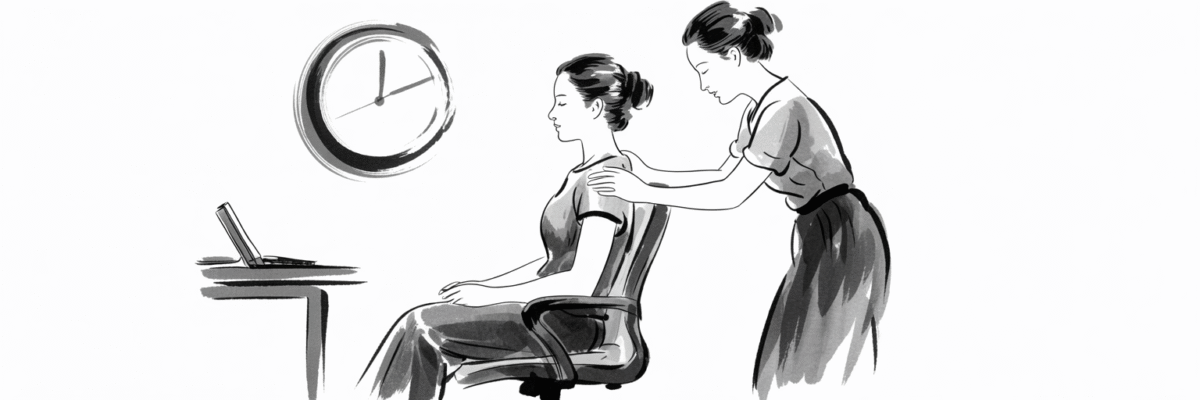
In the modern world of treatments, effectiveness is often measured by duration. A massage might be 60 or even 90 minutes. A therapy session possibly 50 minutes. But what if you could release stress and move back into a state of balance in just five minutes?
What the Research Shows
A study by Vasudev and Shastri examined 120 software professionals experiencing work-related stress. Participants received either hands-on Reiki treatments, distant Reiki treatments, distant placebo, or no treatment—for just five minutes daily over 21 days. The results: both hands-on and distant Reiki treatment groups showed significant stress reduction compared to placebo and control groups. Five minutes. Twenty-one days. Measurable change.
Here’s what I think is key. When participants, both practitioner and client, know the Reiki treatments are five minutes daily, they prepare themselves mentally for exactly that. They create the container for healing within that timeframe. How we prepare ourselves to heal is an important aspect of the treatment itself. When a practitioner and their client commit to five focused minutes for 21 days, a shift becomes possible.
The Japanese Perspective on Time
When we look back at the original Reiki teachers in Japan, we find something interesting: there was never a prescribed time for treatment. Usui Sensei would sit opposite students in the energy itself, teaching through direct experience rather than timed sessions. This “being with” the energy was perhaps the first form of healing—the practice of becoming whole.
Chujiro Hayashi, Usui’s student, established the first hands-on treatment center where two practitioners would work on one client for one to two hours. Yet another of Usui’s students, Toshihiro Eguchi, taught that treatments were 30-40 minutes. Kaiji Tomita practiced the Hatsurei-ho meditation followed by byosen then hands-on healing, all in just 30 minutes initially, building to 60 minutes over five days, when students would begin to experience “Reiha“—the wave of Rei.
What these varying timeframes tell us is profound: time was never the point. Remembering connection was.
Listening with Hibiki
In the Japanese approach, practitioners don’t watch the clock to move their hands—they listen with their palms for hibiki, the echo from the body. A treatment ends when the echo quietens, whether that takes five minutes or fifty.
In non-professional settings, this might occur as a “quickie” treatment between meals or during a family visit. In professional settings, we tend to honor contemporary expectations—the 60-minute massage model that practitioners and clients can prepare for mentally and set their intentions around.
But here’s what the research illuminates: when participants in the study knew the treatments were five minutes long, they entered the healing space without mucking about—focused, present, connected.
The Real Lesson
The lesson from both traditional Japanese practice and modern research is the same: time itself is irrelevant. What matters is our understanding of the healing process and our ability to connect—to remember that connection—in whatever time we have.
A Reiki treatment doesn’t need to be measured in minutes but in presence, in the quality of our attention to the healing space we create together. Five minutes of genuine interconnection may hold more healing potential than an hour of distracted touch.
The invitation is to release our attachment to duration and instead cultivate our capacity for presence—whether we have five minutes or fifty. Energy doesn’t know time. It only remembers connection.